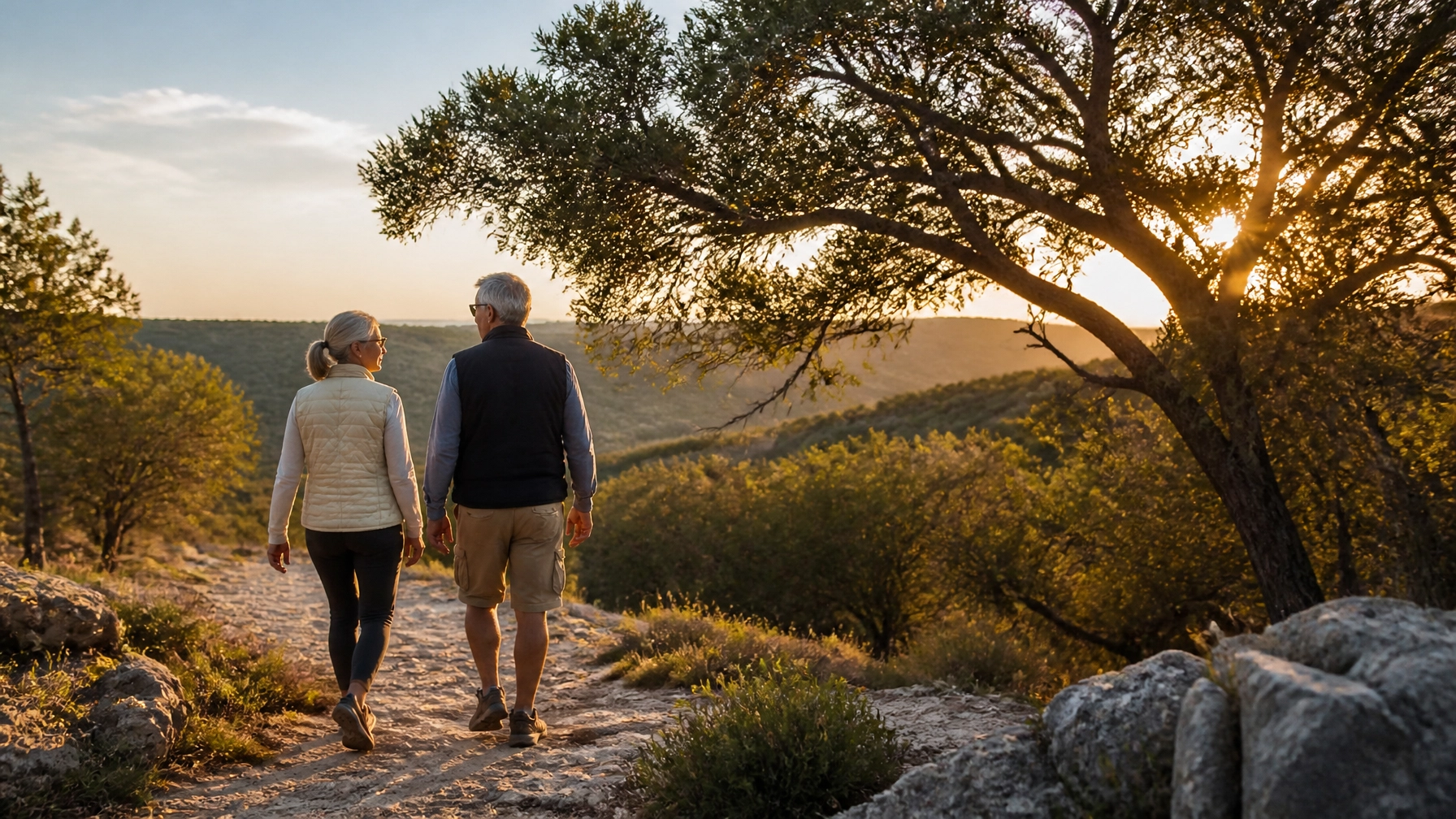
Retirement in the Texas Hill Country often starts with a view, but for many homeowners, it becomes something more personal over time. A stand of live oaks, a seasonal creek, a patch of native grasses, or the quiet return of songbirds at dusk can turn a property into a daily connection with the land itself.
Around Dripping Springs, land ownership is often part of the dream. Whether you live on a few scenic acres or a larger ranch-style property, stewardship can become one of the most rewarding parts of Hill Country living. The goal is not to "perfect" the landscape. It’s to work with it thoughtfully, preserve what makes it special, and create an environment where local wildlife can thrive.
In this guide, we’re shifting the focus from outdoor excursions to what happens closer to home: caring for your land, attracting native fauna, and enjoying the art of Hill Country photography right outside your back door.
Start With Stewardship, Not Overdevelopment
One of the best things about Hill Country property is that it doesn’t need to be overworked to be beautiful. In fact, thoughtful land stewardship often means doing less, but doing it with purpose.
A good starting point is understanding the natural character of your land. The Texas Parks and Wildlife Department offers resources on native habitats, wildlife, and regional ecology that can help homeowners make smarter decisions about what to preserve. On many Dripping Springs properties, that means protecting native grasses, maintaining healthy oak cover, and limiting unnecessary clearing that can reduce habitat value.
A few practical stewardship ideas include:
- Preserve native plant communities: Native species are better suited to local rainfall patterns and support birds, pollinators, and small mammals.
- Avoid excessive mowing: Letting some areas remain natural can create shelter and feeding space for wildlife.
- Protect water features: Even a small pond, drainage area, or seasonal creek can play an outsized role in supporting local fauna.
- Watch for erosion: The Hays County area’s limestone soils and slopes can be sensitive, especially after heavy rain.
"Healthy land is not just beautiful to look at. It becomes a living system that gives something back every season." : Hill Country land steward

Attracting Local Fauna the Natural Way
For homeowners in Dripping Springs, one of the greatest pleasures of country living is seeing more of the wildlife that defines the region. White-tailed deer, painted buntings, hawks, butterflies, foxes, and pollinators all respond to habitat quality.
The key is to create conditions that welcome wildlife without forcing the landscape into something artificial. The Lady Bird Johnson Wildflower Center is a helpful source for native Texas plants that support birds and pollinators.
Here are a few ways to make your property more wildlife-friendly:
- Plant native trees and shrubs: Species that are adapted to Central Texas tend to provide better food and cover for local birds and beneficial insects.
- Add a simple water source: A shallow birdbath, small trough, or well-placed basin can attract birds and butterflies, especially during warmer months.
- Layer the habitat: Ground cover, shrubs, and tree canopy each support different kinds of wildlife.
- Limit bright outdoor lighting: Darker nights are healthier for many species and preserve the peaceful character of the land.
- Be patient: Wildlife often returns gradually as habitat becomes more stable and inviting.
If you enjoy birding, it can be worth setting up a quiet observation area near a porch, patio, or window with a view toward trees or open meadow. That makes it easier to enjoy the rhythm of the land without disturbing it.
Hill Country Photography Tips From Your Own Backyard
You don’t need to drive to a state park to capture memorable Hill Country images. In many cases, your own land offers better opportunities because you can learn the patterns of the light, the wildlife, and the seasons over time.
Focus on the Best Light
Early morning and late evening remain the best times to photograph wildlife and landscapes. The softer angle of the sun adds texture to limestone, depth to oak canopies, and warmer tones to open pasture.
Let the Land Tell the Story
Instead of photographing only close-up wildlife shots, include the environment. A deer framed by live oaks or a hawk perched above rolling acreage says something distinct about retirement in the Hill Country.
Keep Distance and Stay Still
Wildlife photography on private land often rewards patience more than movement. A shaded chair, a porch corner, or a discreet spot near a fence line can be all you need. The National Park Service’s photography tips offer practical guidance that also applies well to nature photography at home.
Use Seasonal Change to Your Advantage
Spring wildflowers, late-summer grasses, and winter silhouettes all create different moods. The same piece of land can look completely different from one season to the next.

Slower Living Through Observation
There’s a reason so many people are drawn to the art of slower living after moving to Dripping Springs. Stewardship naturally encourages a slower pace. You start noticing when the grasses shift, when the birds return, and how morning light moves across your property.
That kind of attention can become its own daily ritual:
- Morning wildlife walks: A quiet walk along your fenceline or driveway can reveal tracks, blooms, and bird activity you might otherwise miss.
- Porch photography sessions: Even 20 minutes with a camera or phone at sunrise can produce beautiful, personal images.
- Seasonal planting and observation: Small changes in habitat can lead to meaningful changes in what wildlife visits over time.
"The best part of Hill Country living is that nature doesn’t have to be scheduled. If you care for the land, it comes to you." : Local nature photographer
Planning Your Life, Planning Your Wealth
Choosing to retire in a place like Dripping Springs is a lifestyle investment. Just as you care for your land with intention, choosing the right financial strategy matters when you want to sustain this kind of lifestyle over the long term.
When we discuss strategic wealth protection, the goal isn't just a number on a screen. It’s about maintaining the liquidity and transparency that support the life you want to enjoy, whether that means caring for a Hill Country property, preserving flexibility, or simply having peace of mind. At Mau Sanchez Capital, our philosophy leans toward publicly traded markets, long-term equity ownership, and avoiding the unnecessary complexity of high-fee "alternative" investments that can lock up your capital.
The peace of mind that comes from a well-constructed, transparent portfolio allows you to focus on what really matters: enjoying your land, your surroundings, and the quieter pleasures that make retirement here so special.

Ready to Explore the Hill Country Lifestyle?
Whether you are already a resident or are just beginning to look at luxury living options in the area, the opportunity to build a meaningful connection with the land is one of the most rewarding parts of living here.
Retirement in Dripping Springs can be active, peaceful, and deeply rooted in place. If you’re ready to align your financial future with the lifestyle you’ve always dreamed of, let’s talk.
Schedule a call with a fiduciary financial advisor today: https://calendly.com/portafoliocapital/15min
Portafolio Capital Management dba Mau Sanchez Capital is a Registered Investment Adviser. This content is for informational purposes only and does not constitute investment advice or a solicitation to buy or sell any security. Advisory services are provided only pursuant to a written advisory agreement.
For more information on wealth management and retirement planning, visit https://portafoliocapital.com/ or give us a call at (512) 593-8380.
Leave a Reply