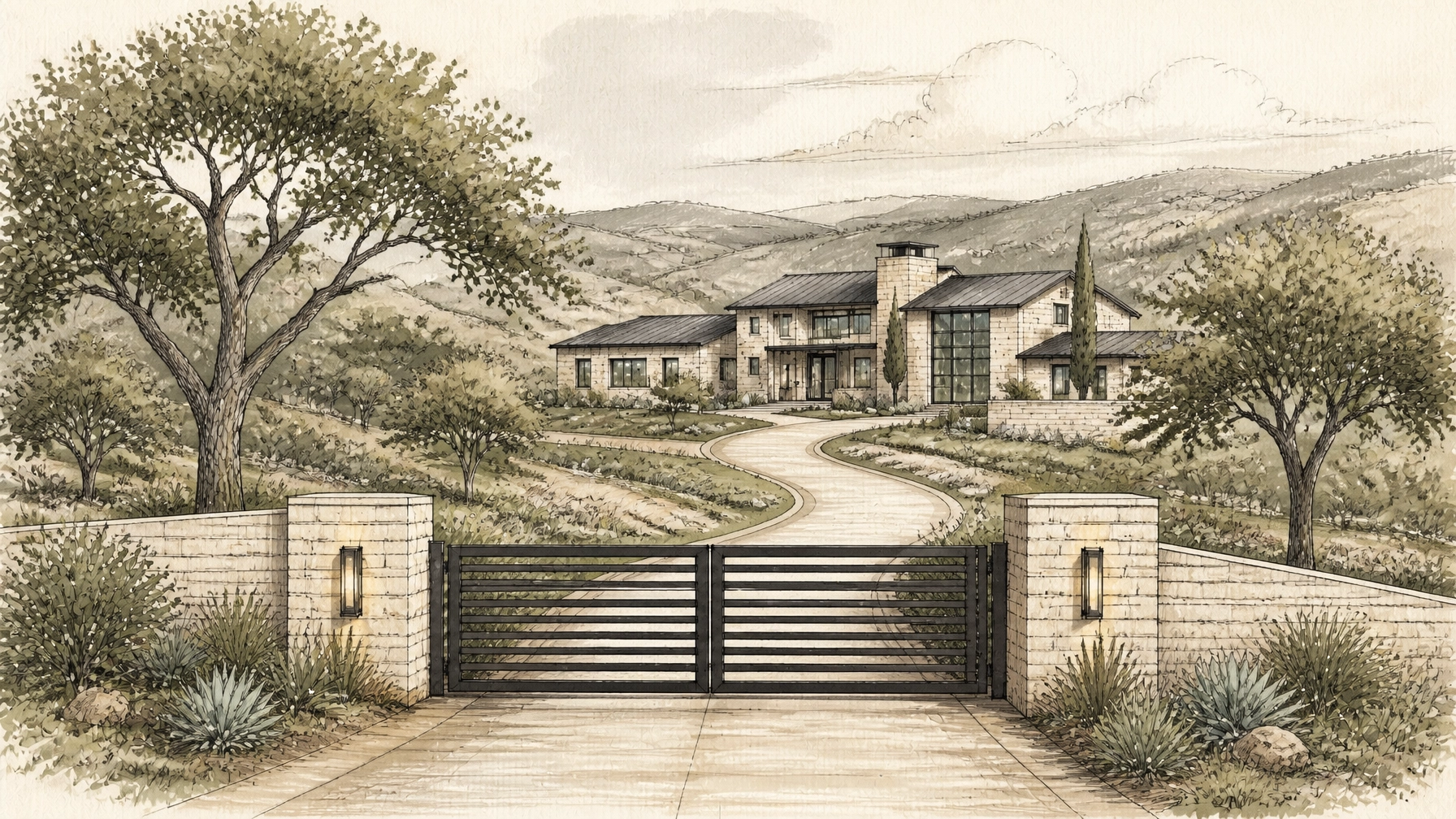
The Texas Hill Country offers a lifestyle that many only dream of: expansive views, a slower pace of life, and the ability to live on significant acreage while remaining close to the cultural hubs of Austin and San Antonio. However, the move to a luxury estate in Dripping Springs or Wimberley brings a unique set of responsibilities. For retirees, protecting a high-value property: and the treasures within it: requires a strategy that is as sophisticated as the architecture itself.
Retirement is meant to be a time of tranquility, but that peace of mind is often tied to the security of your most significant physical asset. In 2026, home security has moved beyond simple alarm panels. It is now an invisible, AI-driven, and fully integrated ecosystem designed to protect your privacy and your legacy without turning your home into a fortress.
The Evolution of Invisible Security
Modern Hill Country architecture emphasizes a seamless transition between indoor and outdoor living. Traditional security cameras and bulky sensors can often disrupt the aesthetic of a custom-built home. The trend for 2026 is "security by design": integrating infrastructure during the construction or renovation phase so it remains virtually invisible.
Architectural-grade cameras are now recessed into soffits or hidden within lighting fixtures. On larger tracts of land, buried perimeter sensors can detect footsteps or vehicle vibrations long before a guest reaches the front gate. For those with significant acreage, autonomous drone patrols can even be deployed to monitor remote corners of the property, providing real-time aerial footage that fixed cameras simply cannot capture.

AI-Powered Detection
The most significant advancement in rural estate security is the use of AI-driven behavior recognition. In the Hill Country, "false alarms" are common due to roaming wildlife. Modern systems are trained to distinguish between a deer crossing a pasture and a person approaching at 2:00 AM. This reduces the fatigue of constant notifications and ensures that when an alert does reach your phone, it is worth your attention.
Wildfire Safety: Protecting Against Nature
In the Hill Country, security isn't just about deterring intruders; it is also about defending against the environment. As rural density grows, the risk of wildfires has become a primary concern for estate owners. High-value property protection now includes "home hardening" techniques that are often required by specialized insurance providers.
The Three Zones of Defensible Space
To protect a luxury estate, fire safety experts recommend a concentric circle approach to landscaping:
- Zone 0 (0–5 feet): The critical ignition zone. This area should contain only non-combustible materials like gravel or stone. Avoid planting shrubs directly against the house or using wood mulch.
- Zone 1 (5–30 feet): This zone should feature lean, clean, and green vegetation. Trees should be pruned so their lowest branches are 6 to 10 feet off the ground to prevent "ladder fires" from reaching the canopy.
- Zone 2 (30–100+ feet): In this outer ring, the goal is to break up continuous fuel. Thinning out brush and ensuring space between tree crowns can prevent a fast-moving fire from leaping toward your home.

Beyond landscaping, many luxury retirees are investing in on-site water sources, such as dedicated fire pumps that can draw from a swimming pool or a rainwater harvesting cistern. These systems, integrated with smart home technology, can even be activated remotely if a threat is detected while you are traveling.
Protecting the Inner Sanctum: Fine Art and Collections
For many retirees, a move to the Hill Country is an opportunity to display collections of fine art, rare wine, or historical artifacts. Protecting these items requires more than just a sturdy lock on the front door.
Object-Level Protection
While a whole-home alarm protects the perimeter, "object-level" sensors provide a second layer of defense. Systems like Art Guard MAP use tiny, wireless sensors that can be attached to the back of a painting or the base of a sculpture. If the item is moved or even touched, an alarm is triggered. These sensors operate 24/7, even when the home’s primary security system is disarmed, providing constant surveillance for your most valuable assets.
Climate and Environmental Control
In Texas, the heat and humidity can be as damaging as any thief. Luxury estates now incorporate museum-grade environmental monitoring. Smart sensors track temperature and relative humidity in real-time, alerting you to HVAC failures before they can damage a delicate canvas or a cellar of vintage wines.

"True luxury is the ability to enjoy your lifestyle without the weight of worry. Security should be silent, intelligent, and proactive." : Common sentiment among Hill Country luxury homeowners.
The Financial Foundation of a Secure Retirement
Your home is a significant part of your net worth, but it is also the place where your family gathers and memories are made. Protecting it is an act of wealth preservation. At Mau Sanchez Capital, we understand that a well-constructed retirement plan must account for all risks: both in the markets and at home.
Just as you would secure your estate with AI sensors and fire-resistant materials, your investment portfolio requires a similar level of rigor and "hardening." Our philosophy focuses on:
- Publicly traded markets for maximum transparency and liquidity.
- Proper asset allocation to manage risk across various market cycles.
- Cost efficiency to ensure your wealth is working for you, not for a bank.
Managing a luxury estate in retirement is a complex endeavor, much like managing a significant investment portfolio. Both require a fiduciary approach where your best interests are the only priority. Whether you are downsizing into high-tech minimalism or building a sprawling custom ranch, your financial security should be as robust as your home security.

Peace of Mind in the Hills
The goal of implementing these high-end security measures isn't to live in fear, but to live with freedom. When you know that your property is protected by the latest AI detection, that your landscape is hardened against fire, and that your private collection is monitored at the object level, you can truly settle into the "slow living" that defines the Texas Hill Country.
As you plan your transition to this beautiful region, consider how your security and your financial strategy can work together to protect the life you’ve worked so hard to build.
Schedule a private meeting with a fiduciary financial advisor today by calling (512) 593-8380 or by visiting: https://calendly.com/portafoliocapital/15min
Portafolio Capital Management dba Mau Sanchez Capital is a Registered Investment Adviser. This content is for informational purposes only and does not constitute investment advice or a solicitation to buy or sell any security. Advisory services are provided only pursuant to a written advisory agreement.
To learn more about our approach to wealth management and risk-adjusted portfolio construction, visit us at https://portafoliocapital.com/ or give us a call at (512) 593-8380.
This article may include stories, scenarios, and perspectives created or assisted by artificial intelligence. Although the individuals and circumstances described may be fictional, the topics are intended to reflect real financial, personal, and lifestyle issues that retirees and individuals commonly face. The content is provided to encourage readers to consider different perspectives that may affect their retirement, regardless of whether they are currently planning, approaching retirement, or already retired. It is intended for general educational and informational purposes only and should not be interpreted as personalized investment, financial, tax, legal, medical, or retirement-planning advice. Individual circumstances vary. Readers should independently verify any information presented and consult appropriately qualified professionals before making financial or personal decisions. No advisory, professional, or client relationship is created through the use of this website.
Leave a Reply