
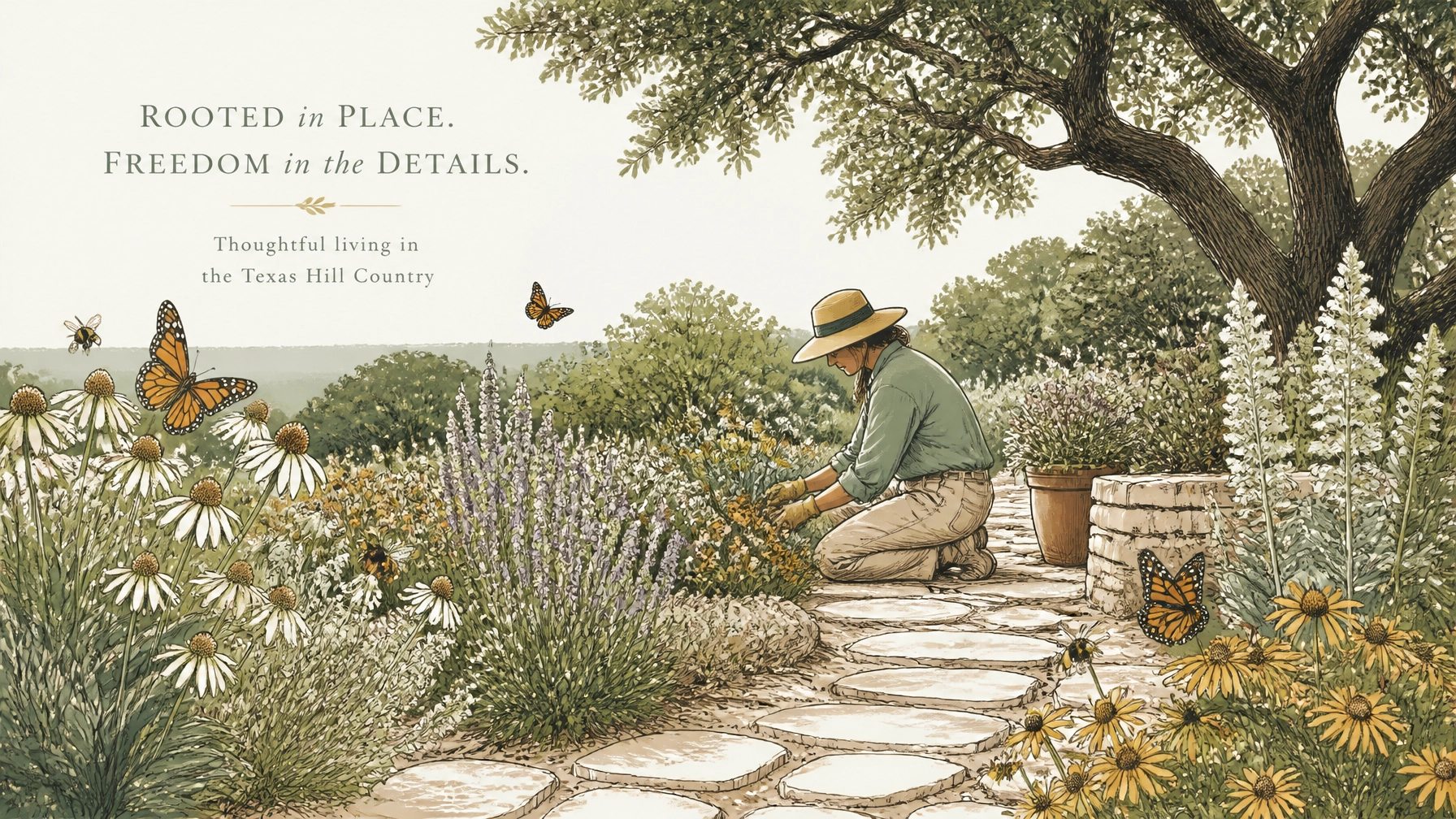
Retirement in the Texas Hill Country offers a different relationship with time. Mornings can begin on the porch instead of in traffic. Afternoons can unfold over a garden path, a winery patio, or a quiet stretch of trail. For many retirees and pre-retirees considering Dripping Springs, the landscape is not merely something to admire: it can become part of daily life.
A native garden is one of the most rewarding ways to settle into that rhythm. With thoughtful design, a Hill Country yard can support butterflies, hummingbirds, bees, and birds while requiring less water and fewer intensive maintenance tasks over time.
The result is more than attractive landscaping. It is an outdoor sanctuary that encourages movement, observation, creativity, and a slower pace of living.
Why Native Landscaping Fits the Hill Country
The Texas Hill Country presents a distinctive gardening environment. Sun, heat, rocky or well-drained soils, periods of drought, and sudden heavy rainfall all influence which plants are likely to thrive.
Native plants are adapted to the conditions of their region. Once established, many require less supplemental irrigation than ornamental plants that are not suited to Central Texas. They also provide food and habitat for local wildlife, making the garden feel more connected to the surrounding landscape.
The Lady Bird Johnson Wildflower Center’s Hill Country native plant collection is a useful starting point for exploring trees, shrubs, perennials, and grasses suited to the region. A local nursery or knowledgeable landscape professional can then help match those plants to the specific conditions around your home.
That last step matters. A sunny limestone slope, shaded live-oak understory, and level backyard near a patio may all require different plant choices. The best garden is not necessarily the one with the longest plant list. It is the one designed around the land you already have.
Build a Pollinator Garden in Layers
A successful pollinator sanctuary does more than scatter a few flowers around the property. It offers food, shelter, water, and places where insects can rest or nest.
Start with a mix of plants that bloom across multiple seasons. This helps provide nectar and pollen throughout the year instead of creating one brief burst of color followed by long gaps.

Spring color
Spring is the season many people associate with the Hill Country. Texas bluebonnets can bring an unmistakable regional character to a garden, while winecup flowers and Missouri evening primrose add color closer to the ground.
Native trees such as Texas redbud and Mexican plum can provide early blooms, shade, and structure. Planted thoughtfully, they can also create a natural transition between the home and the wider landscape.
Summer activity
When the Texas sun is at its strongest, plants such as mealy blue sage, autumn sage, lemon beebalm, purple coneflower, and black-eyed Susan can bring movement to the garden. These plants are attractive to bees, butterflies, and hummingbirds while offering a range of heights, colors, and textures.
Native milkweeds deserve special consideration. According to the Native Plant Society of Texas, milkweeds serve as host plants for monarch caterpillars and provide nectar for many pollinators. Before planting, confirm which species are appropriate for your site and purchase plants from reputable sources.
Fall interest
A garden that remains active into fall can support migrating pollinators while extending the enjoyment of the outdoor season. Fall aster, goldenrod, upright prairie coneflower, four-nerve daisy, and zexmenia can provide late-season flowers and, in some cases, seeds for birds.
For visual impact and easier maintenance, consider planting in groups or drifts rather than placing every plant individually. Repeated clusters create a more natural appearance and make it easier to identify which plants are thriving.
Design for Water-Wise Living
Water-wise landscaping is not about creating a barren yard covered entirely in stone. It is about putting the right plant in the right place and using water intentionally.
Group plants according to their needs. Plants that require occasional supplemental water can be placed closer to the home or an irrigation source, while highly drought-tolerant plants can occupy more exposed areas.
A few practical strategies include:
- Use drip irrigation or soaker hoses to direct water toward the root zone.
- Apply a moderate layer of mulch to reduce evaporation and suppress weeds.
- Consider a rain barrel, cistern, or redirected downspout where appropriate.
- Create a shallow rain garden or dry creek bed to guide runoff.
- Water new plants deeply during establishment, then gradually reduce irrigation as roots mature.
- Avoid heavy fertilization unless a soil test or qualified professional indicates it is needed.
The Texas Master Naturalist Hill Country chapter’s Pollinator Garden Assistance and Recognition Program offers regionally relevant guidance, including recommendations for native plant diversity, supplemental water, and pollinator habitat.

Water-wise design can also make a property more enjoyable to maintain. Instead of spending every weekend managing thirsty turf or replacing plants that cannot tolerate the climate, homeowners can devote more time to sitting outside, tending a few favorite beds, or watching wildlife.
Add Features That Make Gardening Easier in Retirement
A retirement garden should be beautiful, but it should also be comfortable and practical. Small design decisions can determine whether the space remains enjoyable for years to come.
Consider wide, stable paths with a surface that is easy to walk on. Raised beds or gently elevated planters can reduce repeated bending. Seating placed near a shaded area makes it easier to pause and enjoy the garden without turning every visit into a work session.
It can also help to divide the property into manageable zones:
- A welcoming entry garden with shrubs, grasses, and seasonal color.
- A pollinator bed located where flowers can be observed from a porch or window.
- A low-maintenance transition area beneath trees or along a fence.
- A small kitchen or herb garden near the home for convenient access.
- A quiet retreat with a bench, water feature, or shaded patio.
Gardening offers gentle physical activity, but it should not become a source of strain. Short routines: checking irrigation, removing a few weeds, deadheading flowers, or filling a birdbath: can provide a satisfying sense of progress without requiring a full day of labor.
The wellness benefits of time outdoors also fit naturally with the slower pace many people seek in Dripping Springs. Research discussed by the American Psychological Association connects exposure to nature with stress reduction and improved mental well-being. A garden creates an opportunity to experience those benefits repeatedly, just steps from home.

As Rachel Carson wrote, “Those who dwell among the beauties and mysteries of the earth are never alone or weary of life.” A garden gives that idea a practical, everyday form: a place to notice the changing seasons, learn something new, and remain connected to the living world.
Let the Garden Grow With Your Lifestyle
A Hill Country garden does not need to be finished all at once. In fact, starting gradually can be one of the best approaches.
Begin with a small bed in a location you visit often. Choose three to five well-suited native plants, observe how they respond to the site, and expand based on what performs well. Over time, the garden can evolve with your interests and abilities.
Some retirees may prefer a structured landscape surrounding a luxury home. Others may enjoy a more natural acreage setting with native grasses, birding areas, and walking paths. Both approaches can support a meaningful retirement lifestyle when the design reflects how you actually want to spend your time.
The same principle applies to broader retirement decisions. Your home, outdoor spaces, travel plans, charitable interests, and daily routines should all fit within a clear picture of the life you want to enjoy. A thoughtful financial plan can help provide the clarity and flexibility to make those lifestyle choices with greater confidence.
At Mau Sanchez Capital, retirement planning conversations are centered on client-specific portfolio design, appropriate asset allocation, liquidity, transparency, and long-term risk management. The objective is to keep financial decisions understandable and aligned with the life you are building: not to add unnecessary complexity.
A More Rooted Way to Retire
Native landscaping brings together many of the qualities people value in a peaceful Hill Country retirement: natural beauty, lower-maintenance living, outdoor activity, and a stronger sense of place.
Whether you are planning a pollinator sanctuary beside a new ranch-style home or simply replacing part of a traditional lawn, the process can begin with one thoughtful planting. Over time, those plants can become more than decoration. They can mark the seasons, welcome wildlife, create daily rituals, and help your home feel fully rooted in Dripping Springs.

Schedule a private meeting with a fiduciary financial advisor today by calling (512) 593-8380 or by visiting: https://calendly.com/portafoliocapital/15min
Portafolio Capital Management dba Mau Sanchez Capital is a Registered Investment Adviser. This content is for informational purposes only and does not constitute investment advice or a solicitation to buy or sell any security. Advisory services are provided only pursuant to a written advisory agreement.
To learn more about Portafolio Capital Management dba Mau Sanchez Capital, visit https://portafoliocapital.com/ or call (512) 593-8380.
This article may include stories, scenarios, and perspectives created or assisted by artificial intelligence. Although the individuals and circumstances described may be fictional, the topics are intended to reflect real financial, personal, and lifestyle issues that retirees and individuals commonly face.
The content is provided to encourage readers to consider different perspectives that may affect their retirement, regardless of whether they are currently planning, approaching retirement, or already retired. It is intended for general educational and informational purposes only and should not be interpreted as personalized investment, financial, tax, legal, medical, or retirement-planning advice.
Individual circumstances vary. Readers should independently verify any information presented and consult appropriately qualified professionals before making financial or personal decisions. No advisory, professional, or client relationship is created through the use of this website.
Leave a Reply