
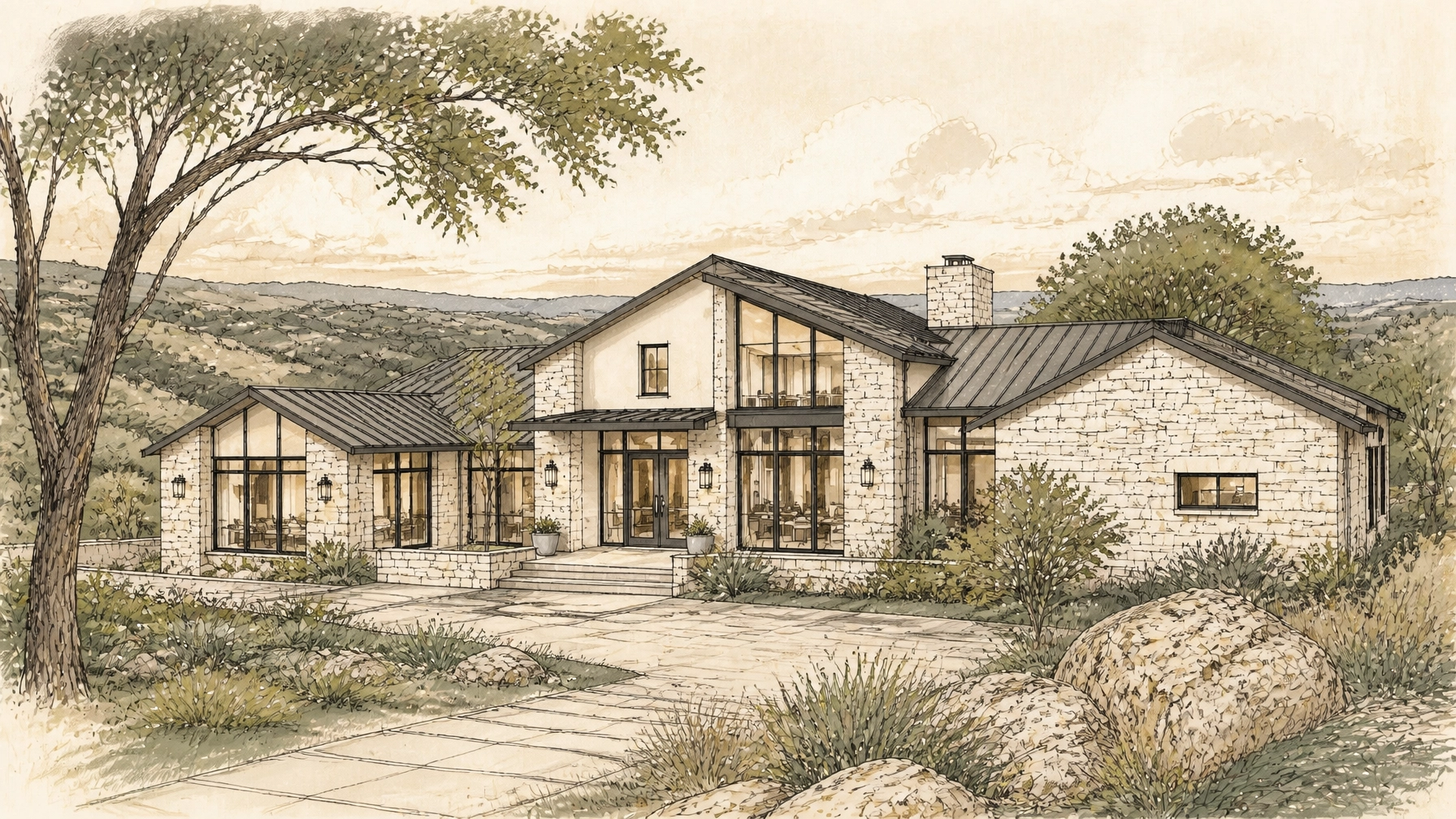
For many retirees, the allure of the Texas Hill Country isn't just about the scenic views or the award-winning wineries: it’s about the opportunity to create a sanctuary that is uniquely theirs. While the Dripping Springs real estate market offers stunning hidden gems and exclusive enclaves, there is a growing trend among affluent pre-retirees to skip the "for sale" sign and build from the ground up.
Building a custom home allows you to dictate every detail, from the orientation of your porch to capture the evening breeze to the height of your limestone fireplace. However, moving from a blueprint to holding the key involves navigating a complex landscape of permits, topography, and financial logistics. This guide outlines the essential steps to building your custom dream home in the "Gateway to the Hill Country."
Step 1: Finding the Right Canvas
Before you hire an architect, you must find the land. In Dripping Springs, the "where" significantly dictates the "how." The region is divided into city limits, the Extra-Territorial Jurisdiction (ETJ), and unincorporated Hays or Travis County.
- City Limits: Subject to City of Dripping Springs zoning and building codes.
- The ETJ: Often requires a mix of city development permits and county utility approvals.
- Unincorporated Areas: Typically offer more freedom but require rigorous planning for septic systems and private wells.
When scouting for lots, look beyond the view. Consider the "buildable envelope." Hill Country terrain is famous for its rocky outcroppings and dramatic slopes, which can add significant costs to foundation work. Ensure you understand the utility situation: Will you be connecting to a municipal water line, or will you need to permit a private well?

Step 2: Selecting an Architect for the Modern Hill Country
Architecture in Dripping Springs has evolved into what designers call "Refined Regionalism." We have moved past the generic modern farmhouse into a style that honors the modern ranch aesthetic.
When selecting an architect, look for one who understands the local vernacular: using native Sisterdale limestone, standing-seam metal roofs, and reclaimed timber. For retirees, the design phase is also the time to prioritize "aging-in-place" luxury. This includes:
- Single-Story Layouts: Maximizing square footage on one level to eliminate stairs.
- Indoor-Outdoor Flow: Using "vanishing" glass walls that open into expansive covered patios.
- Wellness Suites: Integrating spa-like bathrooms with hydrotherapy features and non-slip, high-end finishes.
"The best Hill Country homes don't just sit on the land; they belong to it. They use the sun, the wind, and the stone to create a living experience that is both premium and authentic."

Step 3: Navigating the Permitting Maze
Permitting in Dripping Springs has moved entirely online through the MGO Connect portal. For a custom home, the process typically takes between 4 and 10 weeks, depending on the complexity of your site.
Inside city limits, you will need a residential building permit, which in 2026 is often calculated based on square footage. If you are building on acreage outside the city, your primary hurdles will be the OSSF (On-Site Sewage Facility) permit from Hays County and potentially a Water Pollution Abatement Plan (WPAP) if your property sits over the Edwards Aquifer Recharge Zone.
Working with a builder who has deep roots in the Dripping Springs area is invaluable here, as they often manage these governmental liaisons on your behalf.
Step 4: Budgeting and Financial Planning
Building a custom home is a major capital event. Construction costs in the Hill Country for 2026 can range significantly based on the level of finish and site preparation required. Beyond the "sticks and bricks," you must account for "soft costs": architectural fees, permit fees, and utility impact fees: which can often reach five figures before the first shovel hits the ground.
At Mau Sanchez Capital, we help retirees navigate the financial side of these high-value transitions. Rather than tying up all your capital in a fixed asset, we look at the broader picture of your wealth.
- Liquidity Management: Ensuring you have the cash flow available for construction draws without disrupting your long-term investment strategy.
- Asset Allocation: While your home is a significant part of your net worth, we advocate for maintaining a robust portfolio of publicly traded markets: stocks and traditional fixed income: to provide the transparency and cost efficiency needed for a long-term retirement.
- Risk Management: Construction is unpredictable. We help you design a financial cushion that accounts for market volatility and potential build overruns.

Step 5: Choosing Your Custom Builder
Your builder is your most important partner in this journey. In Dripping Springs, you aren't just looking for a contractor; you are looking for a craftsman who understands the unique challenges of building into limestone and managing the "dark-sky" lighting requirements that preserve our star-filled nights.
Ask for a detailed line-item estimate and a clear timeline. A typical custom build in the Hill Country takes 12 to 20 months from the first design meeting to the day you receive your Certificate of Occupancy.
The Reward: A Home Built for Your Future
The process of building a custom home is a marathon, not a sprint. But as you sit on your back porch, watching the sunset over the hills with a glass of local wine, the effort becomes worth it. You haven't just moved to Dripping Springs; you've built a legacy.
If you are considering a move to the Hill Country and want to ensure your financial plan is as well-constructed as your future home, we invite you to start a conversation.
Schedule a private meeting with a fiduciary financial advisor today by calling (512) 593-8380 or by visiting: https://calendly.com/portafoliocapital/15min
Portafolio Capital Management dba Mau Sanchez Capital is a Registered Investment Adviser. This content is for informational purposes only and does not constitute investment advice or a solicitation to buy or sell any security. Advisory services are provided only pursuant to a written advisory agreement. To learn more about our services, visit https://portafoliocapital.com/ or call us at (512) 593-8380.
This article may include stories, scenarios, and perspectives created or assisted by artificial intelligence. Although the individuals and circumstances described may be fictional, the topics are intended to reflect real financial, personal, and lifestyle issues that retirees and individuals commonly face. The content is provided to encourage readers to consider different perspectives that may affect their retirement, regardless of whether they are currently planning, approaching retirement, or already retired. It is intended for general educational and informational purposes only and should not be interpreted as personalized investment, financial, tax, legal, medical, or retirement-planning advice. Individual circumstances vary. Readers should independently verify any information presented and consult appropriately qualified professionals before making financial or personal decisions. No advisory, professional, or client relationship is created through the use of this website.
Leave a Reply