
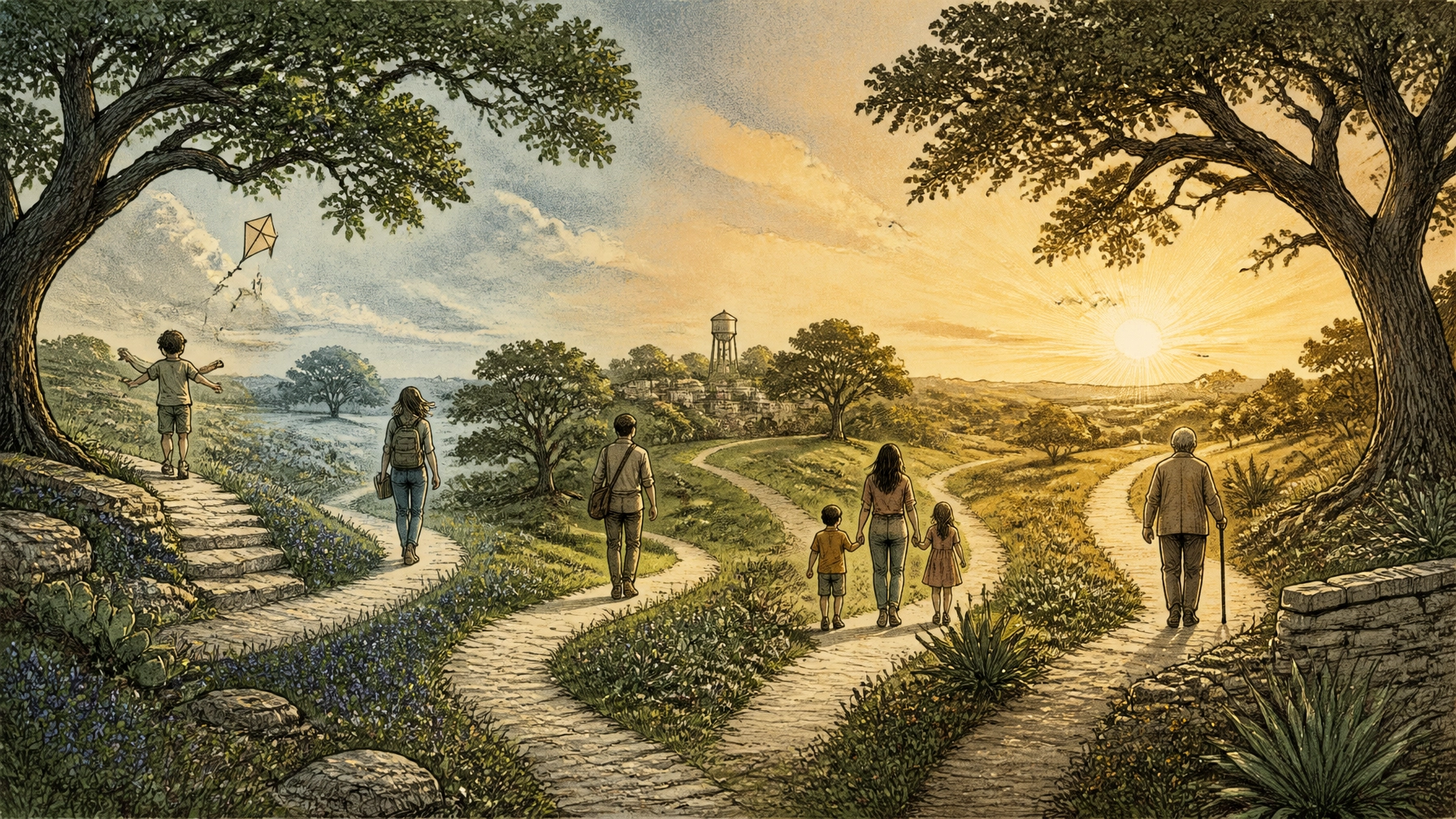
Retirement planning used to focus on making money last for 20 years. Today, that may not be enough.
For someone retiring in their mid-60s, a 30-year planning horizon is increasingly reasonable. Living into the 90s is not guaranteed, and it is not statistically true that most Americans reach age 90. But for healthy retirees and couples, the possibility is significant enough that age 90: or even 95 and beyond: should be part of the conversation.
The Social Security Administration’s actuarial tables indicate that a meaningful share of people who reach age 65 will live to age 90. The CDC reports that life expectancy at age 65 was 19.7 additional years for the total U.S. population in 2024. For many people, however, average life expectancy is only the beginning of the planning question.
If your retirement may last three decades, your financial plan, home, healthcare strategy, and daily lifestyle should be designed accordingly.
Longevity changes the retirement timeline
A longer life can be one of retirement’s greatest gifts. It can also create new financial demands.
Retiring at 65 and living to 90 means funding 25 years of housing, food, transportation, insurance, healthcare, hobbies, travel, and family support. Living to 95 adds another five years: often at a point when healthcare and assistance needs may be higher.
This longer timeline changes how retirees may think about:
- The amount of income they need each year
- How much of their portfolio should remain invested for growth
- The timing of Social Security and other income sources
- Future medical and caregiving expenses
- Whether their home will continue to serve them comfortably
- How they want to spend their time in their 70s, 80s, and 90s
In Dripping Springs, this may also mean looking beyond the appeal of a beautiful Hill Country property. A retirement plan should consider whether the home, community, and surrounding services can support your preferred lifestyle for many years.
1. Plan for a long retirement, not just an early retirement
Many retirees divide life into two broad stages: the active early years and the quieter later years. That distinction can be useful, but it should not imply that the later years are financially unimportant.
The first decade of retirement may include more travel, dining, outdoor recreation, home projects, and visits with family. Later decades may involve less travel but more spending on healthcare, home assistance, transportation, or modifications to the home.
A durable plan should account for both periods.
That often means creating a thoughtful approach to:
- Essential spending that must be supported regardless of market conditions
- Discretionary spending that can change from year to year
- Inflation over a 25- to 35-year horizon
- Market volatility during the early years of retirement
- Cash needs for unexpected expenses
- The possibility that one spouse may live many years longer than the other
A portfolio built for a short retirement may become overly conservative too soon, leaving it vulnerable to inflation. At the same time, a portfolio that takes more risk than a retiree can emotionally or financially tolerate may make retirement unnecessarily stressful.
The goal is not to eliminate uncertainty. It is to build a structure that recognizes uncertainty and manages it with proper asset allocation, diversification, liquidity, and regular review.
2. Make income durable enough for your 90s
Retirement income should be evaluated over the full length of your life: not only the first few years after leaving work.
Guaranteed or predictable income sources, such as Social Security and pensions, may provide an important foundation for essential expenses. The timing of Social Security is a personal decision that can involve health, family longevity, marital status, cash needs, and other factors. It should be evaluated as part of the broader income plan rather than in isolation.
Your investment portfolio may then serve several purposes:
- Supporting ongoing withdrawals
- Preserving purchasing power against inflation
- Providing liquidity for major expenses
- Funding lifestyle goals such as travel, dining, or charitable giving
- Creating flexibility if your housing or healthcare needs change
For a long retirement, transparency and liquidity matter. Publicly traded stocks and traditional fixed income can offer daily pricing and access to capital, which may be valuable when your needs evolve. Proper portfolio construction can help balance long-term growth with the need for stability and access to funds.
A retirement plan should also be flexible enough to adapt after a strong market, a difficult market, a major purchase, or a significant change in health.

3. Treat healthcare as a changing lifestyle expense
Healthcare costs are not limited to insurance premiums. Over time, a retirement budget may need to include:
- Medicare premiums and cost-sharing
- Prescription medications
- Dental, vision, and hearing care
- Out-of-pocket medical expenses
- Home health assistance
- Transportation to appointments
- Home modifications
- Assisted living or memory care
- Long-term custodial care
One of the most important distinctions to understand is the difference between medical care and long-term care. According to Medicare.gov, Medicare generally does not cover ongoing custodial long-term care.
Medicare explains it plainly: “You pay all costs for non-covered services, including most long-term care.”
That does not mean every retiree will require years of paid care. It does mean the possibility deserves a place in your plan. You may want to discuss how care could be funded through personal savings, income, insurance, family support, or a combination of resources.
The National Institute on Aging provides additional information about paying for long-term care and the distinctions among different types of support.
This is also where liquidity becomes especially important. A retirement portfolio may need to support an unexpected care expense without forcing the sale of long-term investments at an inconvenient time.
4. Choose a home that can evolve with you
A Dripping Springs retirement may begin with morning walks, winery visits, gardening, golf, and evenings on the porch. But your housing needs may change over the next 20 or 30 years.
A home designed for long-term comfort may include:
- A single-level primary living area
- Few or no steps at the main entrance
- Wider hallways and doorways
- A comfortable bedroom and bathroom on the main floor
- A low-maintenance outdoor area
- Good lighting and practical storage
- Space for visiting family or a future caregiver
- Reasonable access to medical services and daily necessities
These features do not need to make a home feel clinical. In the Hill Country, thoughtful design can blend accessibility with limestone, natural wood, generous windows, shaded patios, and native landscaping.
Our earlier article on why retirees are choosing custom homes over resale properties in Dripping Springs explores how some homeowners are planning for comfort and functionality well beyond their first years of retirement.
Acreage can be appealing, but it also brings maintenance, water, road, landscaping, and property management considerations. A beautiful property should fit not only the lifestyle you want at 65, but also the level of responsibility you may prefer at 80 or 90.

5. Design for healthspan, connection, and purpose
Longevity is about more than adding years. It is also about making those years meaningful.
Dripping Springs offers a lifestyle that can support active aging through outdoor recreation, local events, creative pursuits, restaurants, wineries, and community connections. Walking trails, fitness programs, and social organizations can help create structure after a career no longer provides it.
The Springs Family YMCA and the Hill Country Senior Center are among the local resources discussed in our guide to staying fit in the Hill Country.
A strong retirement lifestyle may include:
- Regular movement that matches your abilities
- Social activities and recurring community commitments
- Creative or educational interests
- Time outdoors
- A manageable home environment
- Opportunities to volunteer or mentor
- Visits with family and friends
These choices can affect finances, too. A connected, active lifestyle may influence where you live, how much you spend on transportation, whether you need extensive home modifications, and how much support you may need later.

A practical longevity checkup for your retirement plan
If you are approaching retirement or considering a move to Dripping Springs, ask yourself:
- What would change if I lived five or ten years longer than expected?
- Which expenses are essential, and which could be adjusted during difficult markets?
- How would I pay for a significant healthcare or caregiving need?
- Will my home remain comfortable and manageable as I age?
- Does my portfolio provide both long-term growth potential and accessible liquidity?
- What relationships, activities, and routines will give my later years purpose?
Planning for longevity is not about worrying over every possible outcome. It is about giving yourself more freedom to enjoy the years ahead: whether that means exploring the Hill Country, hosting family on the porch, or simply having confidence that your financial life can adapt.
Schedule a private meeting with a fiduciary financial advisor today by calling (512) 593-8380 or by visiting: https://calendly.com/portafoliocapital/15min
Portafolio Capital Management dba Mau Sanchez Capital is a Registered Investment Adviser. This content is for informational purposes only and does not constitute investment advice or a solicitation to buy or sell any security. Advisory services are provided only pursuant to a written advisory agreement.
To learn more about Portafolio Capital Management dba Mau Sanchez Capital, visit https://portafoliocapital.com/ or call (512) 593-8380.
This article may include stories, scenarios, and perspectives created or assisted by artificial intelligence. Although the individuals and circumstances described may be fictional, the topics are intended to reflect real financial, personal, and lifestyle issues that retirees and individuals commonly face.
The content is provided to encourage readers to consider different perspectives that may affect their retirement, regardless of whether they are currently planning, approaching retirement, or already retired. It is intended for general educational and informational purposes only and should not be interpreted as personalized investment, financial, tax, legal, medical, or retirement-planning advice.
Individual circumstances vary. Readers should independently verify any information presented and consult appropriately qualified professionals before making financial or personal decisions. No advisory, professional, or client relationship is created through the use of this website.
Leave a Reply